
Tapioca Starch Buyer's Guide: Native, Modified and Food-Grade Specs
November 2026
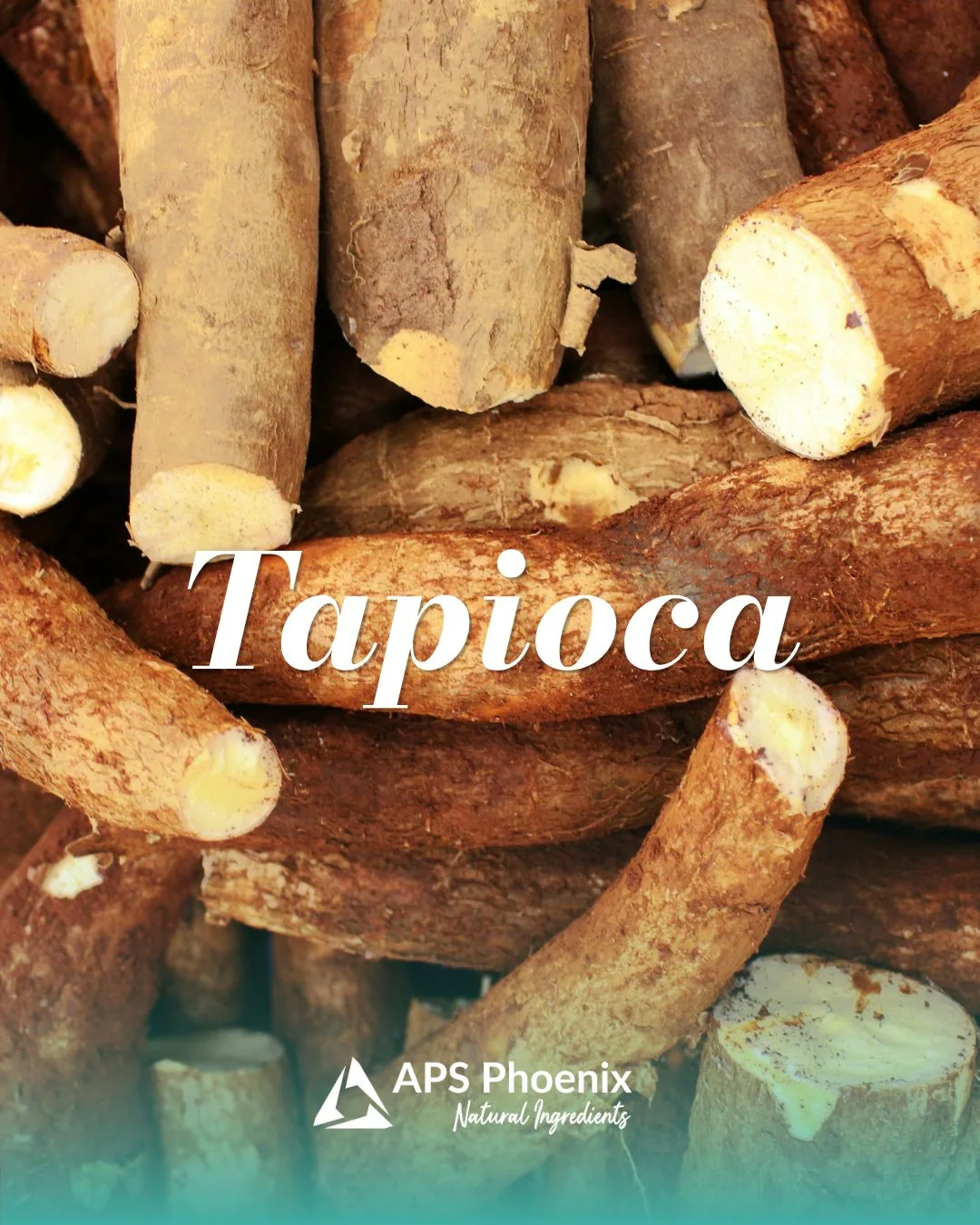
Tapioca starch is one of the most versatile starches a food or pet food manufacturer can buy: neutral in flavor, white, naturally gluten-free and effective as a binder and thickener. But “tapioca starch” on a purchase order can mean several different products. A native starch, a modified starch and a pregelatinized starch behave very differently in a process, and the spec sheet is where those differences show. This guide covers what B2B buyers should know before sourcing bulk tapioca starch.
What tapioca starch is
Tapioca starch is the starch extracted from the root of the cassava plant. The roots are washed, peeled and rasped, the starch is separated from the fiber and the juice, and then it is dried into a fine white powder. Our native tapioca starch is simply that: 100% cassava, with no other ingredients.
Two names cause confusion. In US trade, “tapioca flour” and “tapioca starch” usually refer to the same extracted starch. Cassava flour is a different product: the whole peeled root, dried and milled, so it keeps the root’s fiber and behaves more like a flour than a pure starch. If your formula was developed with one, do not swap in the other without testing.
The grades buyers choose between
Most purchasing questions come down to which grade fits the process. APS Phoenix supplies tapioca starch in five forms:
- Native tapioca starch — the standard, unmodified starch. Binding, viscosity and clean-label texture; it declares simply as “tapioca starch”.
- Modified tapioca starch — physically or chemically treated to tolerate heat, acid, shear or freeze-thaw cycles that would break down a native starch. Modified starches are labeled as such, and in the EU they carry an E number.
- Pregelatinized tapioca starch — cooked and dried so it thickens in cold water. Used in instant mixes, no-cook fillings and ready-to-use applications.
- Resistant tapioca starch — a functional dietary-fiber starch for high-fiber and low-glycemic formulations.
- Organic tapioca starch — USDA Organic certified native tapioca starch for organic and clean-label programs.
A practical rule: start with native starch if your process is gentle and your label needs to stay short. Move to a modified grade when the native starch loses viscosity under your cooking, acidity or shear conditions, or when the product has to survive freezing. Choose pregelatinized when there is no cooking step at all.
What a native tapioca starch spec sheet should list
A specification is only useful if it is specific. As a reference, a typical native tapioca starch specification we supply lists:
- Whiteness: min. 92 (Kett meter)
- Moisture: max. 13%
- Starch content: min. 85%
- Ash: max. 0.2% · Pulp: max. 0.2% (sieve test)
- pH: 5–7 · SO2: max. 10 ppm
- Viscosity: min. 700 BU (Brabender, 6% w/w)
- Microbiology: total plate count max. 5,000 CFU/g; molds and yeasts max. 100 CFU/g; Salmonella not detected in 25 g; E. coli and coliforms below 10
Each line answers a practical question. Whiteness affects the color of light products such as sauces and bakery fillings. Moisture drives flowability and shelf life. Viscosity tells you how much thickening power you are paying for, and it is the parameter most worth checking from lot to lot. Pulp and ash show how well the starch was separated from the root. SO2 matters because US labeling rules require sulfites to be declared when they reach 10 ppm or more in the finished food.
Ask for the specification of the exact grade you will buy, and a certificate of analysis (COA) with every lot. A spec for “tapioca starch” in general is not enough to approve a supplier.
Food grade and pet food applications
In food manufacturing, tapioca starch is used in bakery and snacks, prepared foods and binding and texture systems. It is a common choice for gluten-free bakery, where it helps with structure and chew, and for sauces and fillings that need a neutral flavor and a smooth, glossy texture.
In pet food, tapioca starch works as a grain-free binder that supports expansion and kibble structure in extrusion, and as a thickener in wet foods. For feed and pet food systems that need a starch-rich carbohydrate rather than a refined starch, tapioca hard pellets made from cassava roots are a more economical format. For confectionery, desserts and beverages, tapioca pearls come from the same root.
If you are comparing starches, potato starch is the closest alternative. The two are not interchangeable one-to-one, so plan a trial before switching.
Packaging, minimum order and logistics
We supply tapioca starch in bags and big bags, by the full container load. The minimum order is one 20′ container (1 FCL). Native tapioca starch has a best-before date of 24 months from manufacturing when stored indoors in dry, ventilated, ambient conditions, in well-closed bags and away from odorous products.
We deliver DDP to the USA and Canada, so the price you approve already covers freight, duties and delivery to your plant, and CFR/CIF to ports worldwide.
How to compare tapioca starch suppliers
- Does the grade match your process (native, modified, pregelatinized, resistant, organic)?
- Is there a written specification for that exact grade, and a COA for every lot?
- Is viscosity consistent from lot to lot, not just within spec once?
- Do the certifications match your program (organic, food safety scheme, kosher or halal if needed)?
- Is the price comparable on a landed basis (DDP vs. FOB) and is supply planned for recurring volumes?
Frequently asked questions
Is tapioca starch gluten-free?
Yes. Tapioca starch comes from cassava, which contains no gluten. If you make a gluten-free claim, ask your supplier for the documentation that supports it for the specific product and facility.
Can I replace cornstarch or potato starch with tapioca starch?
Often, but not one-to-one. Each starch has a different gelatinization behavior, viscosity and texture, so the dosage and process usually need adjusting. Run a trial with the exact grade you plan to buy.
What is the minimum order for bulk tapioca starch?
One 20′ full container load. Tell us your application, grade and annual volume, and we will quote the right product with pricing and availability within 24 hours on business days.
Related ingredients
Need this in bulk?
APS Phoenix supplies these ingredients in bulk and full container loads, with consistent quality and reliable global delivery.
Request a quote